Ceramic workshops, lessons and courses. Learn how to thow, slab build, handbuild and glaze.
In this Throwing course, you will learn the fundamentals of wheel throwing! From centering the clay to shaping beautiful forms, this course is designed to help you feel comfortable with the wheel. I focus on techniques that will help you create cups, bowls, vases, and plates. Perfect for beginners, but plenty of tips for those looking to improve their skills. With the techniques you learn in this course, you’ll be able to create anything out of ceramics that you like!
Before you get started with ceramics, I think it’s helpful to understand how the ceramic process works. The clay goes through different stages as it dries, and it needs to be fired in a kiln twice. In this video, I’ll walk you through each stage and explain what you can do at every step.
For this first throwing lesson, I have selected 12 tools that I believe are essential for starting pottery in your home studio (even if it’s just a corner of your kitchen, that’s where I started!). You can always expand your toolkit, but if you have these 12 items, you’re ready to start your ceramics journey!
In this pottery lesson, I’ll show you additional tools that I often enjoy using in the studio. These tools are great for specific techniques or can help make the throwing process a little easier. While they’re not essential for beginners, you might already want to take a look and see which ones you’d like to try out.
Before you get started, it’s important to wedge your clay. Wedging means thoroughly kneading the clay to remove air bubbles, soften it, and create a consistent texture. I recommend doing this before throwing anything on the wheel.
The first step in wheel throwing is centering the clay. This means that you press the clay towards the middle of the wheel. Only when it’s perfectly in the middle you will be able to throw something on the wheel. In this video, I’ll show you how to cone up the clay and press it down, explaining how to position and move your hands to make it easier.
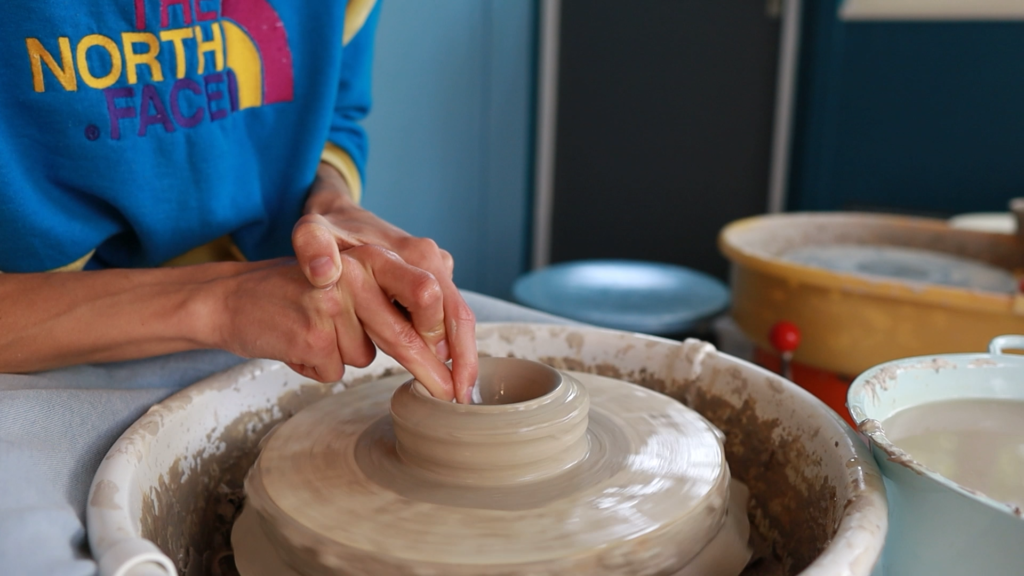
Once your clay is centered, the next step is to open it up. This is when you decide how wide you want the bottom to be. In this video, I’ll show you how to hold your hands steady and make an even bottom with consistent thickness.
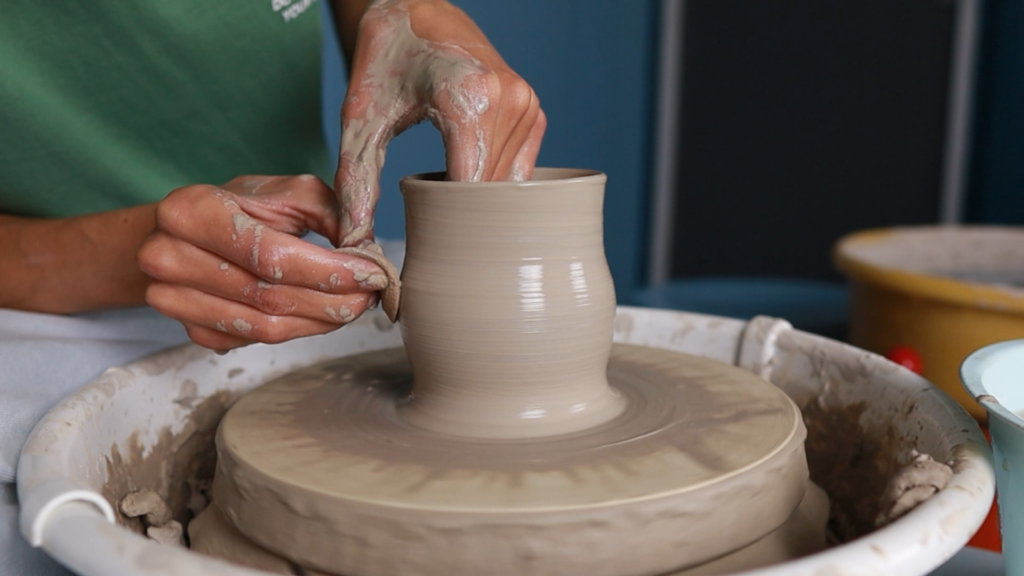
After opening the clay, it’s time to pull up the walls to make the piece taller. Using a sponge, I’ll show you how to move your hands slowly and carefully, and I’ll explain what to focus on during this step.
In this pottery lesson, I’ll demonstrate how to throw a mug from start to finish, beginning with centering the clay. In the end I’ll show you how to shape it into a form that you like.
If you don’t have a Giffin Grip, you can still trim your pieces. In this online pottery lesson, I’ll show you two ways to center your piece on the wheel and how to secure it with small pieces of clay so it stays in place while trimming.
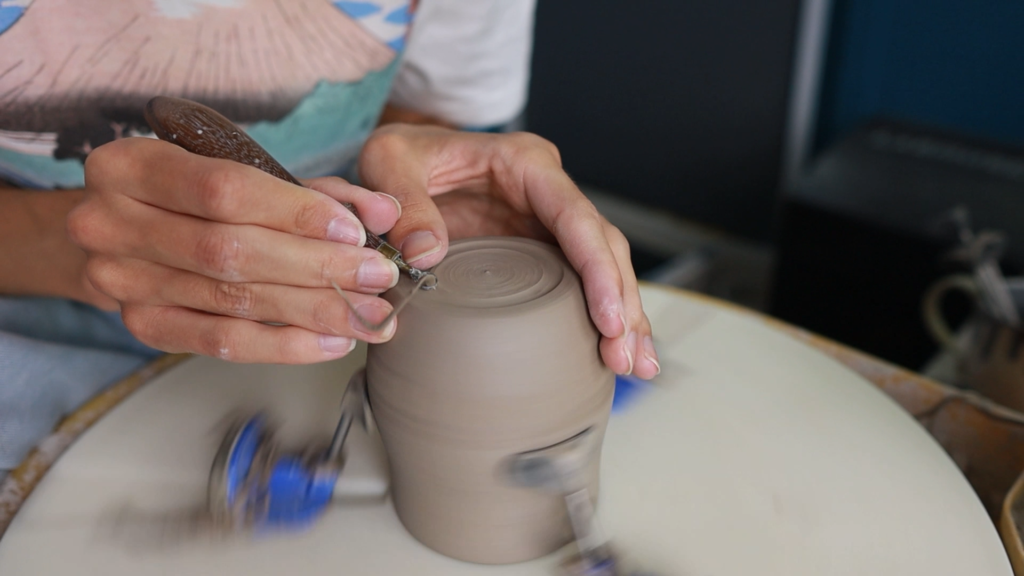
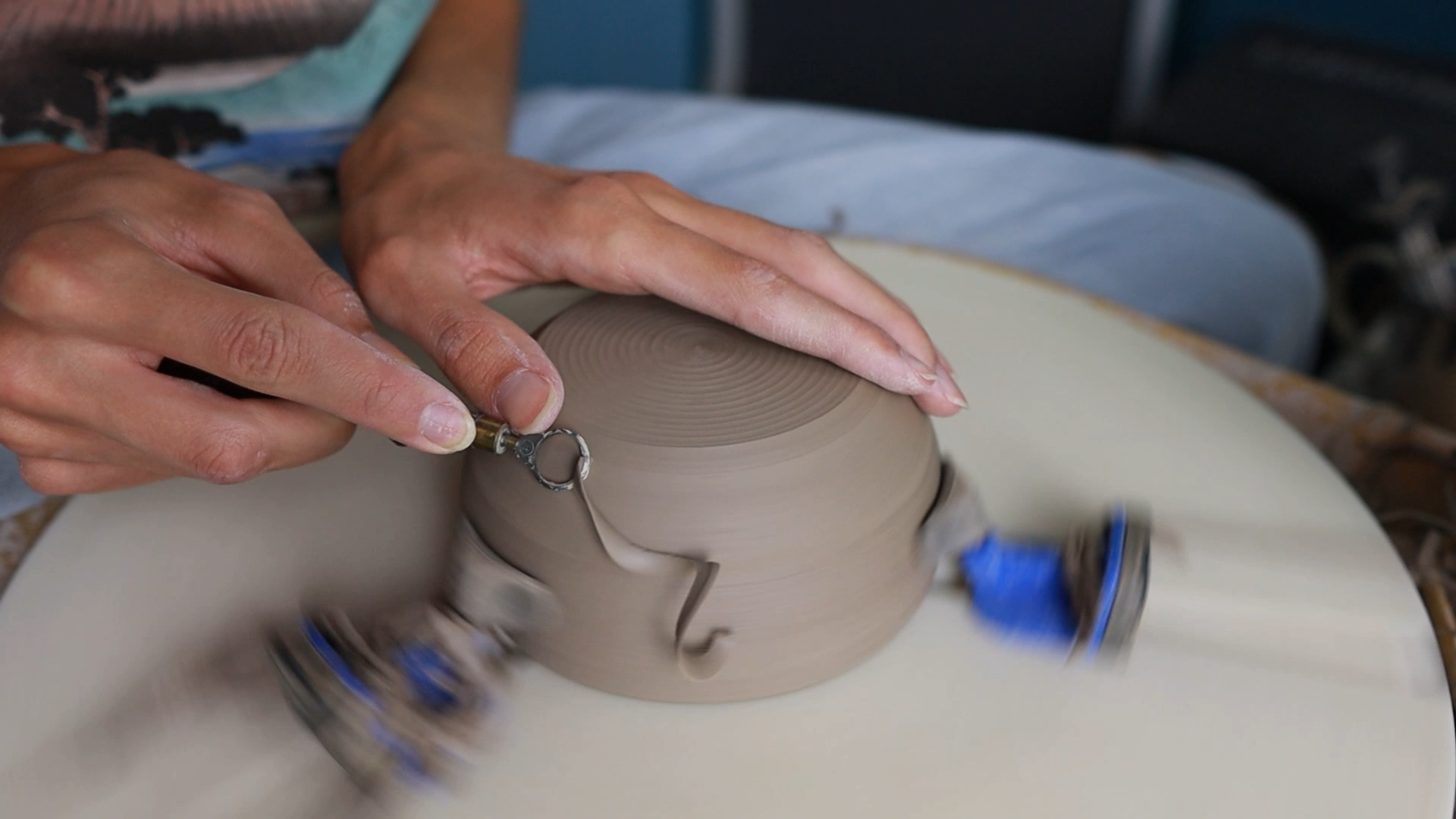
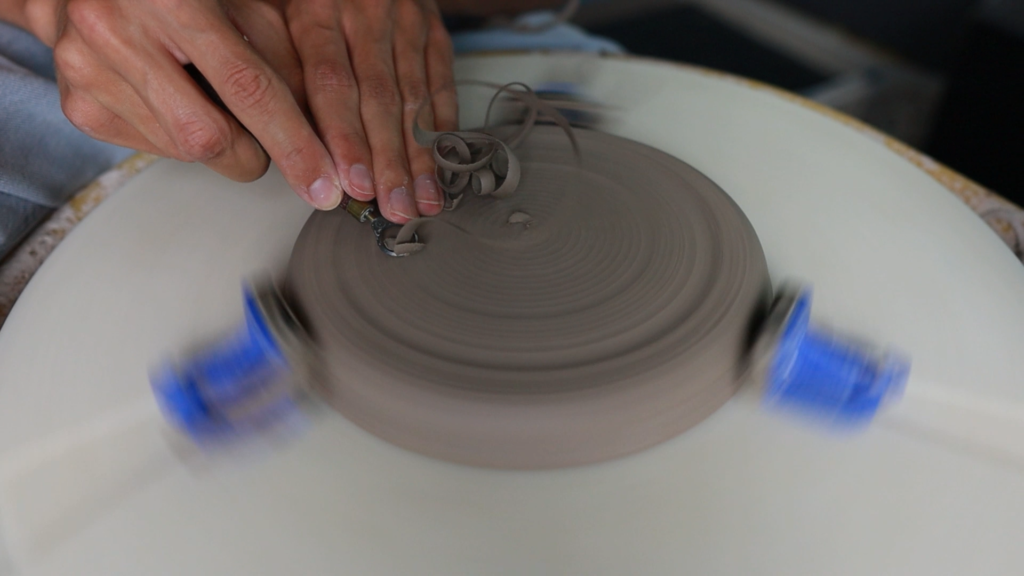
In this lesson, I’ll show you how I like to trim the bottom of a mug. I start by smoothing out the piece and making sure the entire bottom is centered. Then, I remove some excess clay from the sides and shape the mug into a nice, flowing form, from the rim all the way down to the bottom. I add a foot ring by trimming away clay from the center, and finally, I’ll share my techniques for making the bottom perfectly smooth.
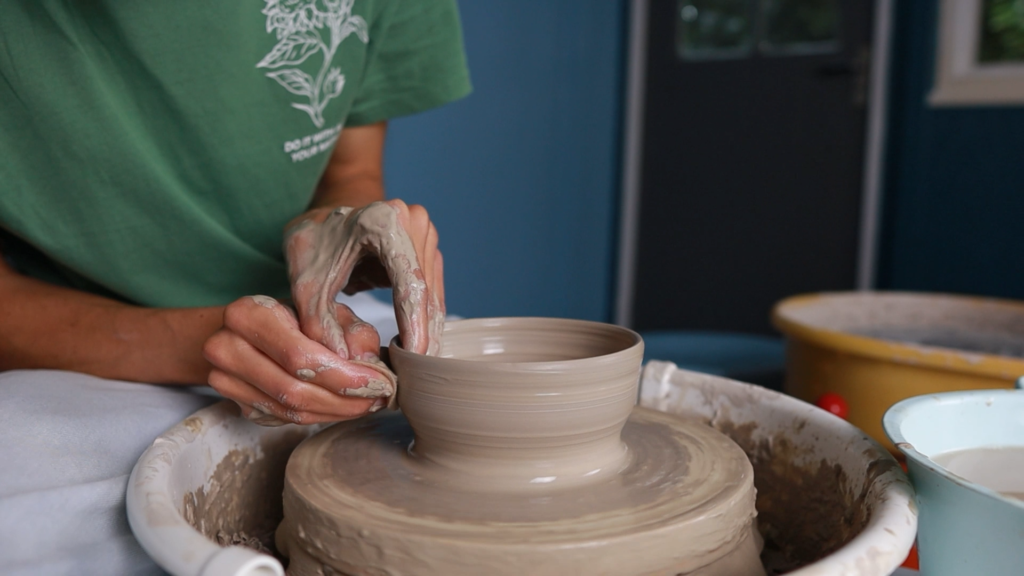
Throwing a bowl is slightly different from throwing a cylinder or mug because of its wide shape. In this video, I’ll show you the process from start to finish and share tips to prevent the bowl from collapsing.
Once the bowl has dried for a day and is leather-hard, it’s ready for trimming. Trimming a bowl is similar to trimming a cup, but the shape is usually rounder, and the bottom may be wider. I’ll demonstrate how to use different sizes of trimming tools and how to smooth the surface afterward.
To throw a vase, it’s best to start with a straight cylinder. I’ll show you all the steps: centering the clay, opening it up, and pulling the walls into a cylinder. After that, I’ll demonstrate how you can shape the cylinder into a vase design that suits your personal style.
Once the vase has dried for a day, it’s ready to be trimmed. In this ‘How to trim a vase’ lesson, I’ll show you how to remove excess clay, shape it nicely, and add a foot ring. I’ll also demonstrate how to smooth it with a sponge, trimming tools, and your fingers.
In this lesson, I’ll show you how to throw a plate. A plate is quite different from anything else you throw on the wheel because it’s so flat. It’s essentially just a bottom with a small rim. In this video, you’ll see how I press down the clay using my fist and how I keep the clay centered while doing so. I’ll also show you how to make the plate nice and flat with an even thickness.
After letting this plate dry a bit longer than the other pieces, it came off the bat by itself. I let it dry a little longer because cutting a plate off the bat with a wire can be tricky. I carefully trim a foot ring on the wheel and then smooth it out the same way I do with all my other trimmed pieces.
Become part of our ceramics community. Learn everything there is to know about pottery, become a better potter and keep in touch with other artists and community members. Share your work, read the newest blogs and be the first one to recieve updates about the world of ceramics.