Ceramic workshops, lessons and courses. Learn how to thow, slab build, handbuild and glaze.
In this course I will teach you everything I know about slab building. I start of with the different steps you go through when making something with slabs. I explain how to roll out a slab, cut it out in a specific shape, and how to attach them onto each other in two different ways. Then I go into more detail when making a mug, bowl, vase and plate. And I also show you how you can come up with your own designs!
Before you get started with ceramics, I think it’s helpful to understand how the ceramic process works. The clay goes through different stages as it dries, and it needs to be fired in a kiln twice. In this video, I’ll walk you through each stage and explain what you can do at every step.
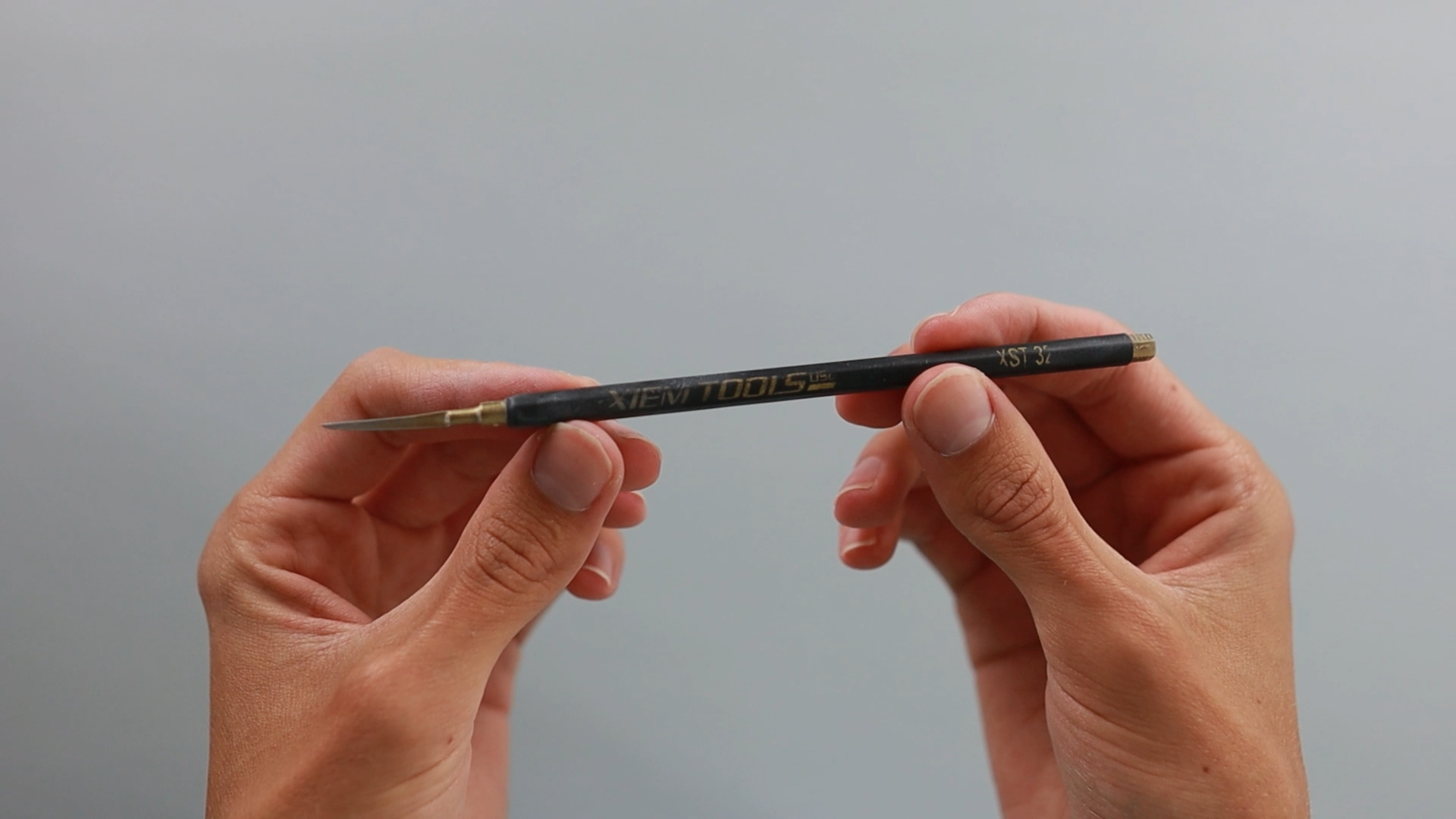
In this slab-building lesson, I’ll introduce the tools I’ll be using throughout the slabbuilding course. I’ll explain how each tool is used, and you can decide which ones you’d like to try for yourself.
Even if you don’t have a slab roller, you can still make everything I show in this course by rolling out the slabs yourself with a rolling pin. In this video, I’ll show you how to do this and share some tips to help you roll the slabs evenly.
If you do have a slab roller, or are thinking of getting one, this video will explain how it works and show you just how easy it is to roll out a large slab with a slab roller.
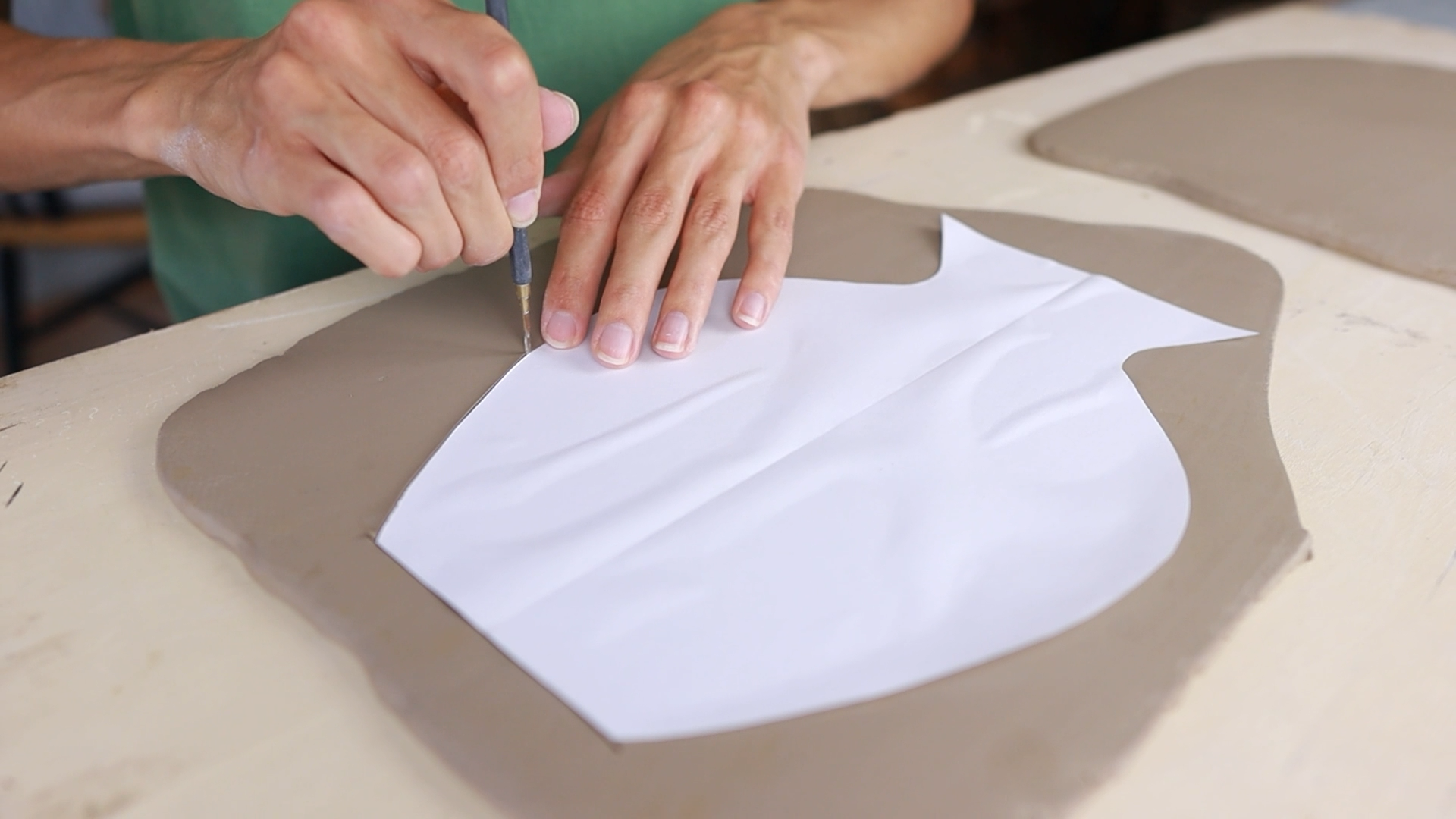
Once you’ve rolled out your slab, it’s time to cut out the pieces you’ll actually use to build your project. In this video, I’ll show you two different ways to approach this. You can either cut a shape from paper and trace it onto the clay, or use a ruler if you want to work with straight lines.
When slab building, you’ll often need to attach multiple slabs of clay to each other. In this video, I will show you the two most common techniques for doing this and explain when to use each technique. This is something you will have to think about when you are making your own designs later on!
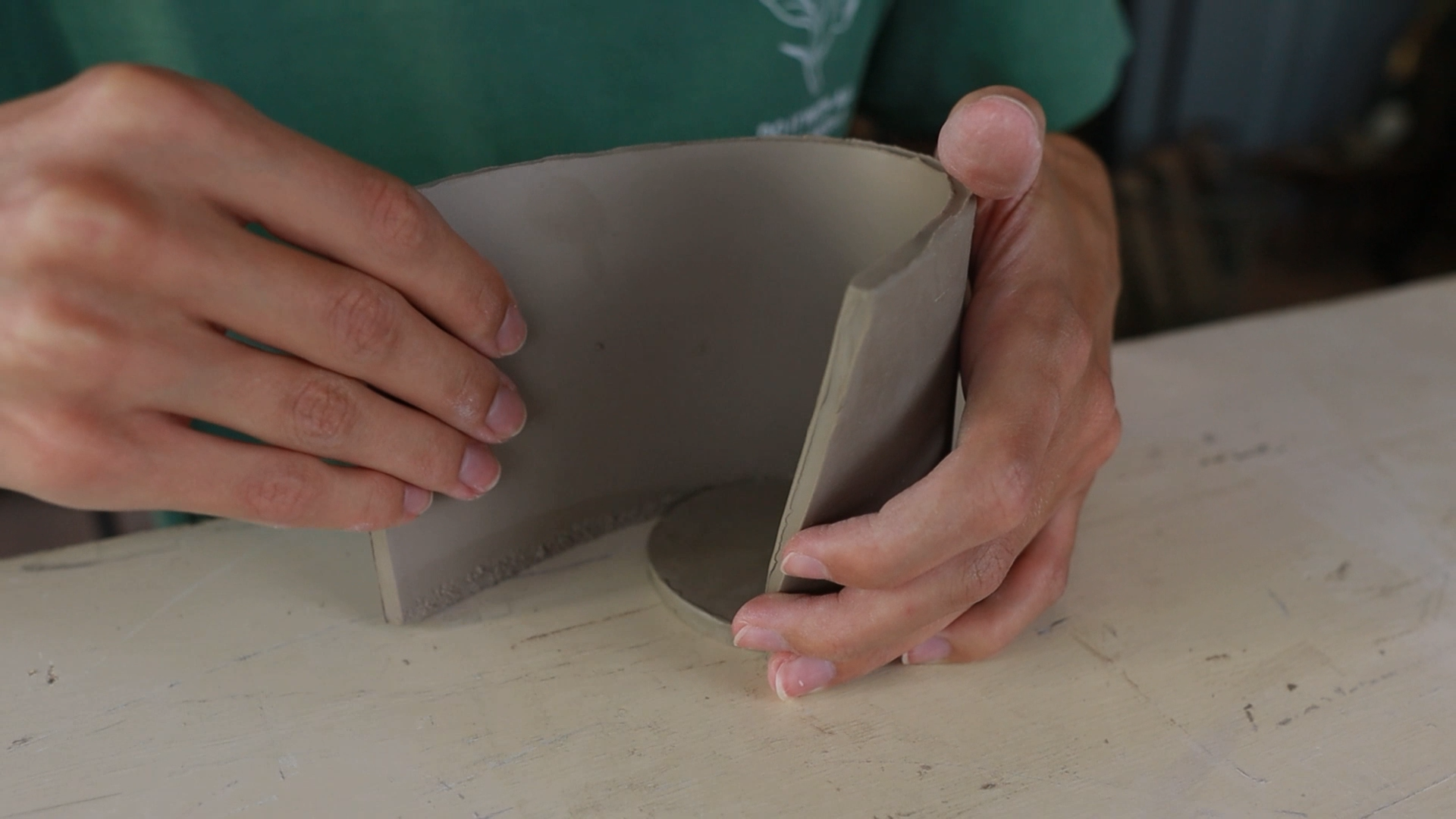
After going through all the techniques, it’s time to put them into practice. In this video, I’ll show you how to make a simple cylinder-shaped mug. For this, I cut out a circle for the bottom and a rectangle for the sides. You can use the same techniques in this video to make other cylindrical objects as well 🙂
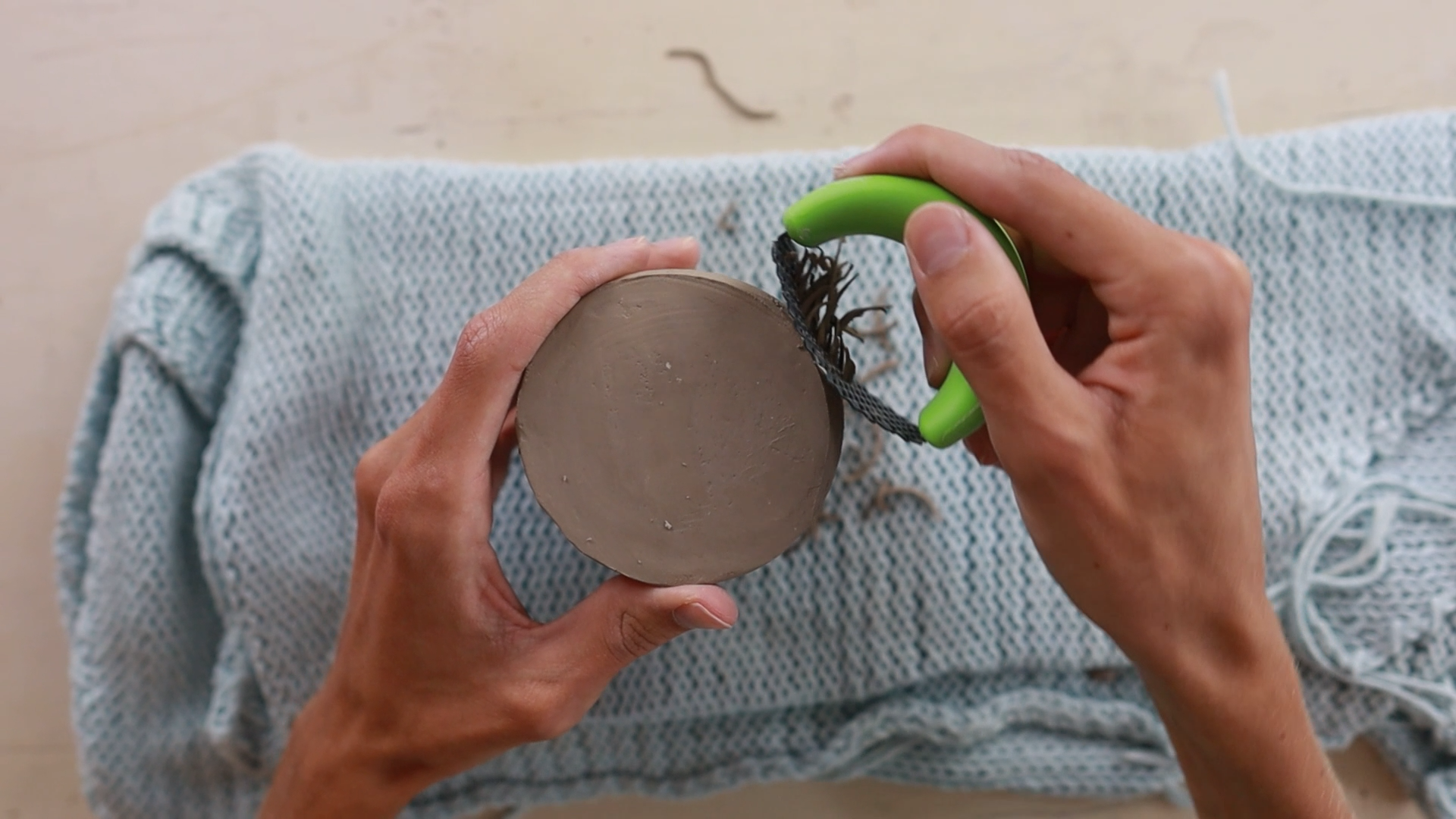
After the mug has dried for a day, I like to put a bit more work into the bottom. I smooth out the edges and add a foot ring by trimming away some clay from the center. Then, I smooth it all out, and you have your mug!
If you’d like you can add a handle to the mug. Here I will explain how you can cut a handle out of a slab, smooth it out and attach it in an nice shape onto the mug.
In this slabbuilding lesson, I’ll show you how to slab-build a bowl using just one slab. I’ll be using a plaster press mold, but if you don’t have one, you can also use a regular bowl to achieve the same result.
You can make slab building as simple or as complex as you like. As you’ve seen, you can make a bowl from just one slab, but in this video, I’ll show you a different shape made from five slabs. Before we start making this bowl, I’ll explain how I came up with the design by first sketching it on a piece of paper.
When the bowl is leather hard, you can flip it upside down and work on the bottom. Since the bowl has a square shape, I’m giving it a square foot by trimming away some clay from the center. After this, the bowl is finished and ready to dry!
Slab building a plate is easy! The slab is already big and flat, so all you have to do is round the edges a bit, and you can do this in many different ways. In this video, I’ll show you how I like to use a frying pan as a mold!
To show you that there are many ways to approach slab-built designs, I’ll show you a very interesting vase shape in this video. I’ll make the vase from two large slabs in the shape of a vase and add a small bottom. I hope you like it 🙂
Become part of our ceramics community. Learn everything there is to know about pottery, become a better potter and keep in touch with other artists and community members. Share your work, read the newest blogs and be the first one to recieve updates about the world of ceramics.